


Indian Wedding Venue in Italy: Why a Luxury Wedding Planner Chose an Umbrian Castle for Her Own Wedding
In 2023, at a wedding planners' conference in Doha, our team met a planner who had spent a decade designing other people's celebrations. She was not engaged. No date, no fiancé on paper, no reason at all to be talking to a castle in Umbria. And she said, half joking, that the first wedding she brought us would probably be her own.
A few months later Eric proposed to her in Malta. And Minoti Mehta, founder of The Vermilion Company, came back and booked Castello di Petrata for herself.
Their celebration has now been featured in Vogue India, in a piece about how a professional approaches the one wedding she cannot delegate. I want to write about it here for a different reason. Every month, couples from India, the United States and the United Kingdom ask me the same cautious question: can an Italian castle really host an Indian wedding, with all of it, properly? This is the most honest answer I can give, because the person who tested us does this for a living.

The Planner Who Chose Her Own Indian Wedding Venue in Italy
There is a reason I open with the conference in Doha rather than with the photographs.
When a couple books a venue, they are trusting photographs, a website and a few emails. When a planner with ten years of experience books one for her own wedding, she is making a professional judgment with her own money and her own family on the line. She knows which questions to ask, where venues cut corners, and what goes wrong at eleven at night when a supplier has not turned up.
That is the strongest endorsement a property like ours can receive, and it is worth far more than any award. It is also the reason I would tell any couple searching for an Indian wedding venue in Italy to ask one specific question of every property on their list: which wedding professionals have married here themselves?
Her guiding intention, as she described it to Vogue India, was "to marry my favourite person, in my favourite country, surrounded by our favourite people." Everything else followed from that sentence.
What an Indian Wedding Venue in Italy Actually Has to Handle
Most beautiful Italian properties can host a ceremony and a dinner. An Indian wedding is a different proposition, and couples discover the gap late.
A South Asian celebration is not one event with a rehearsal dinner attached. It is a sequence of distinct events, each with its own mood, its own colours, its own music and often its own dress code: a haldi in daylight, a mehendi that runs for hours, a sangeet with choreographed performances, the wedding ceremony itself, and a reception. Several of them want to be outdoors. Several want to be loud. One of them needs a priest, or in this case a mother who had studied with one.
That sequence asks six things of a property, and most venues can provide three or four. It needs several genuinely separate spaces, so the haldi does not happen where the reception will be built. It needs three or four consecutive days, not a Saturday. It needs flexibility on food, because an Indian menu is not a variation on an Italian one. It needs accommodation, because families flying from two continents should not be scattered across hotels. It needs a sound and lighting setup that can carry dhol, a DJ and live performances. And it needs staff who have done this before and will not be startled by any of it.
The same logic applies to any celebration that carries two traditions, which is why we also wrote about a Bangladeshi-Irish wedding here. The difference with a full Indian wedding is simply scale: more events, more days, more moving parts.
Intention Before Inspiration
The part of the Vogue India piece I would put in front of every couple has nothing to do with Italy.
Before choosing anything, Minoti wrote down what the wedding was for. Not a palette, not a venue shortlist, not a mood board: an intention. Every decision after that had to earn its place against it, and she deliberately left out details that were merely fashionable.
I have watched more than a thousand weddings from the inside, and the hollow ones are always the same: assembled from screenshots, every element beautiful, nothing belonging to the couple. The decisions guests remember years later are almost never the expensive ones.
At this wedding, guests arrived to find a newspaper, designed by the bride's cousin, telling the couple's story and their families' before anyone had sat down. The bride walked down the aisle alone, to a song that had been her late father's favourite, and a bird motif that ran through the save-the-date film and the invitations carried the same quiet tribute. None of that costs what a flower wall costs. All of it is what people talked about afterwards.
How Indian Rituals Travelled to an Umbrian Castle
This is the section couples actually want, so let me be concrete about what happened here.
The haldi brought colour that our stone courtyards have never seen in quite that combination: marigold garlands, Rajasthani umbrellas and handcrafted decorations that the bride and her mother had sourced themselves in the markets of Mumbai, carried across a continent and installed against fourteenth-century walls.
For the mehendi, she wore a saree borrowed from her grandaunt and remade into a custom skirt and blouse, which is the kind of detail no vendor can sell you.
The sangeet menu did what good fusion does and refused to choose: Indian street food alongside Italian dishes, in the country they had picked precisely because they both loved it. Guests from both sides, American and Indian, were encouraged to take part in the performances rather than watch them.
The ceremony is where the two traditions met most intelligently. The bride's mother officiated, having worked beforehand with the family's priest to understand the meaning of each ritual, so the couple could reinterpret the rites without hollowing them out. The Saptapadi, the seven steps, became a tasting menu drawn from the couple's love of food and travel, with steps renamed as the Pizza Promise, the Pasta Pact, the Chocolate Dedication, the Espresso Embrace and the Wine Toast. At the reception, tables were named after Italian cities.
I am an Umbrian hotelier, not a scholar of Hindu ritual, so I will say only this: done casually, that reinterpretation would have been tasteless. Done the way it was done here, with the priest consulted first and the meaning understood before anything was changed, it was one of the most moving ceremonies this castle has hosted.
Hosting Guests Who Have Never Been to an Indian Wedding
If you are planning a destination Indian wedding in Italy with guests from several countries, this is the part worth copying outright.
Rather than spending on favours that get left in rooms, the couple spent on information and hospitality. Every guest received a menu tailored to their own dietary requirements. Everyone unfamiliar with Indian weddings received a styling guide: dress codes for each event, colour palettes, a glossary explaining what each ritual means, and even suggestions on where to shop for an outfit. Nobody had to arrive hoping they had guessed right.
In each room there was a tote bag illustrated with Assisi and the couple's initials, locally sourced olive oil with a custom label, a postcard inviting guests to write down a memory, and a printed itinerary for the whole weekend.
The principle underneath is simple and travels to any wedding, Indian or not: guests are not an audience, they are people a long way from home who want to know what is happening and what to wear. We wrote more about that in our guide to hosting guests well in Italy.

Why Umbria Works for a Destination Indian Wedding in Italy
Couples planning from Mumbai, Delhi, New Jersey or London usually start with Tuscany or Lake Como, and both are beautiful. Here is what Umbria offers a multi-day Indian celebration specifically.
Exclusive use means the property is yours for the whole run of events, which matters enormously when a haldi at eleven in the morning and a sangeet at eleven at night happen on the same ground. With the whole castle booked, nobody is asking you to finish the music because other guests are sleeping.
Several separate settings let each event have its own stage: two terraces, a stone courtyard, gardens, a pool, a covered Limonaia for dancing and thick-walled cellars below. Twenty-two rooms and suites sleep up to 55 guests on site, so the families who have travelled furthest stay inside the celebration rather than commuting to it.
Everything is run by our own staff and our own kitchen rather than contracted out, which is the practical difference between a full-service venue and a villa you rent bare. And at 600 metres above the valley, the evenings cool down quickly even in high summer, which is not true of most Italian venues at sea level, as we explained in our guide to marrying here in July and August.
Getting here is easier than the map suggests: roughly half an hour from Perugia airport and around two hours from Rome Fiumicino, the hub most international guests fly into.
Questions to Ask Any Indian Wedding Venue in Italy
Whether you are considering us or a property three regions away, ask these in writing before you pay a deposit:
Can we hold four or five separate events across three or four days, and what does each day cost?
How many distinct spaces can we use, and how far apart are they?
Will ours be the only wedding on the property for the whole period?
Have you hosted a haldi, mehendi, sangeet or Hindu ceremony before?
Can an open flame be used for the ceremony, and under what conditions?
Can a baraat procession, horses or a dhol player be accommodated, and where?
Will your kitchen prepare an Indian menu, or may we bring a specialist chef to use it?
How do you handle fully vegetarian, Jain, halal or no-alcohol requirements across every event?
How many of our guests can sleep on site, and what are the room rates?
Until what time can music play, indoors and outdoors, and is there a curfew?
What is the indoor alternative for each event if the weather turns, and does it cost extra?
Who from your team is present at every event, not only at the wedding ceremony?
A venue that answers all twelve clearly is a venue you can plan with. One that answers vaguely will become a problem eight months from now, with your deposit already paid. The same principle applies when you come to see the place in person, which we covered in what to ask on a venue visit.
The Champagne Break
One last idea from this wedding, and the one I have started recommending to every couple.
Minoti's favourite memory of her own wedding was not an event at all. It was sitting quietly with Eric, looking out over the Umbrian countryside, with nothing scheduled. She has since started building those pauses deliberately into her clients' weddings, and calls them champagne breaks.
After sixteen years of watching couples move through three days at a run, I think it is the single best piece of planning advice in the whole Vogue India article. Build fifteen minutes of nothing into your timeline. It will be the part you remember.
The Team Behind the Wedding
Planning and design were by Minoti Mehta of The Vermilion Company, who planned her own celebration here. Photography was by TK&Photography. The venue, accommodation, kitchen and service were our own team at Castello di Petrata, with planning coordination by my sister Giorgia Landrini and the kitchen led by my brother Luca. The full feature is on Vogue India.

Frequently Asked Questions
Can you have an Indian wedding in Italy?
Yes. Couples regularly hold a haldi, mehendi, sangeet, Hindu ceremony and reception at Italian properties, usually across three or four days. What makes it work is an exclusive-use venue with several separate spaces, on-site accommodation for both families, flexibility on catering, and staff who have run multi-event weekends before.
Which Italian venues can host a haldi, mehendi and sangeet?
Look for exclusive-use properties with multiple distinct outdoor and indoor settings, rather than a single terrace. At Castello di Petrata each event has its own stage: terraces for daytime rituals, a stone courtyard for dinner, gardens and a pool, and a covered Limonaia for dancing late into the night.
Is a Hindu wedding ceremony legally binding in Italy?
No. A religious Hindu ceremony performed in Italy is not legally recognised there, so most international couples complete the legal marriage in their own country and hold the ceremony in Italy as a symbolic celebration, which can follow their traditions exactly without any Italian bureaucracy.
How many days do you need for an Indian wedding in Italy?
Usually three to four. A typical structure is arrivals and a welcome event on day one, haldi and mehendi on day two, sangeet in the evening, and the ceremony and reception on the final day. Compressing all of it into a single weekend is possible but rushes the rituals that guests travelled furthest to see.
Can an Italian wedding venue serve Indian or fully vegetarian food?
It depends entirely on the venue, so ask before booking in exactly these terms: will your kitchen cook an Indian menu, or may we bring a specialist chef to use it? At this wedding the sangeet menu combined Indian street food with Italian dishes, and every guest received a menu tailored to their own dietary requirements.
How many guests can stay at an Indian wedding venue in Italy?
It varies widely, and it is the question couples underestimate. Castello di Petrata has 22 rooms and suites sleeping up to 55 guests on site, with additional guests staying nearby. For a multi-day celebration, the more of your families who sleep at the venue, the less transport and timing you have to manage.
When is the best time of year for an Indian wedding in Italy?
Late May, June and September are the most comfortable months in central Italy, with long evenings and warm nights. July and August work well at a hill venue, where the air is dry and the temperature falls sharply after sunset, though the first half of August is harder for supplier availability across Italy.
Planning a celebration that needs several days and several traditions? Write to me at info@castellopetrata.com with your events and approximate guest count, and I will tell you honestly how they would work here.
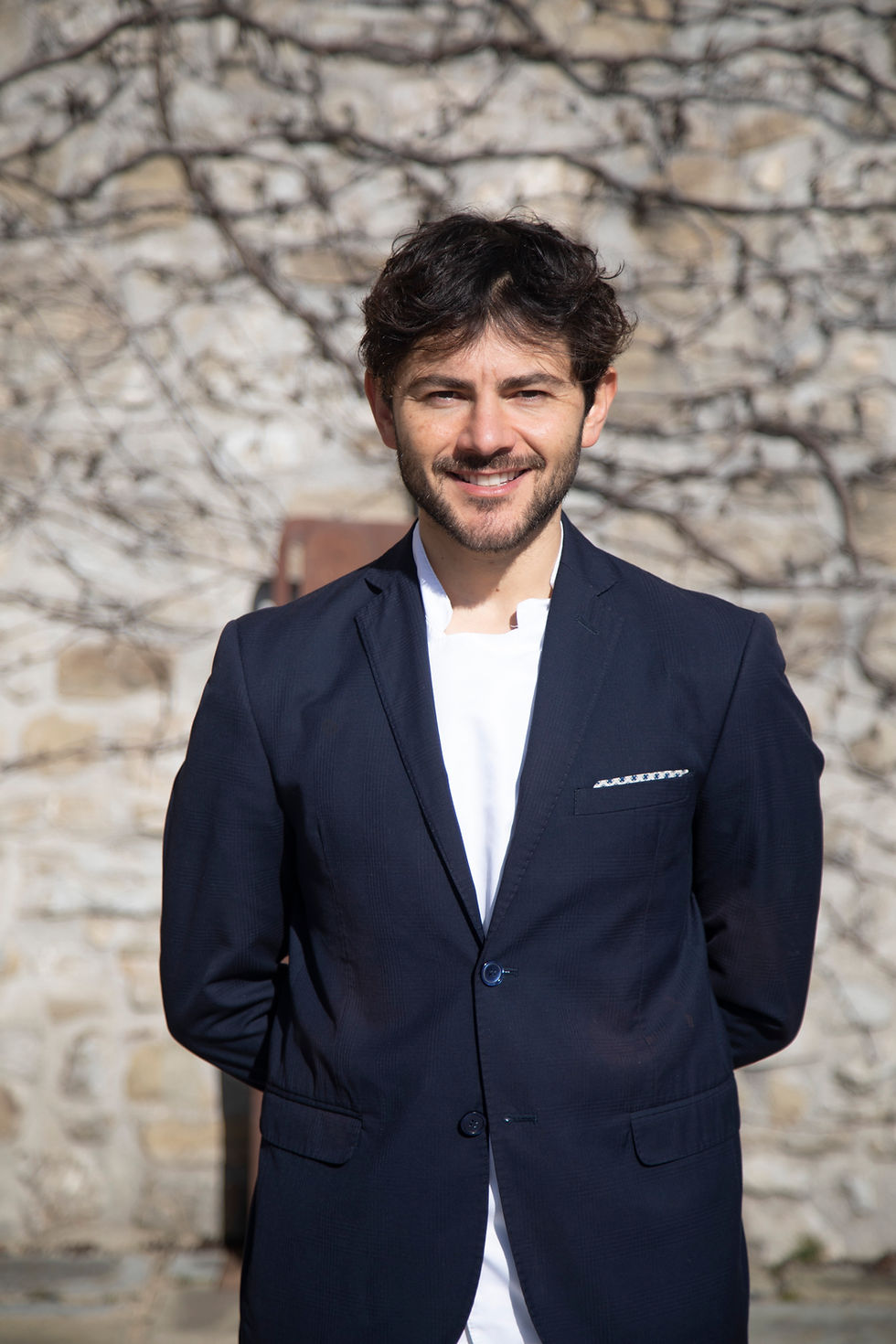
Giovanni Landrini is the owner and director of Castello di Petrata, a 14th-century castle near Assisi that has hosted international weddings since 2010.


Comments