


Do You Need a Wedding Planner in Italy? An Honest Answer from Someone Who Has Seen Both.
It is one of the first questions couples ask when they begin planning a wedding in Italy from the United States.
Do we need a wedding planner? Can we do this on our own? What exactly does a planner do that the venue doesn't?

Hiring a Wedding Planner in Italy: What You Really Need to Know
After 15 years of hosting destination weddings at Castello di Petrata — an exclusive-use castle near Assisi in Umbria — I have worked alongside hundreds of wedding planners, and I have also worked directly with hundreds of couples who chose to plan without one. I have seen both approaches succeed beautifully. I have also seen both go wrong.
This is the honest answer I give every couple who asks.
The Short Answer
You do not always need an independent wedding planner. But you do always need someone — either a planner or a venue coordinator — who knows what they are doing, knows the local context, and is fully present on your wedding day.
The question is not really "planner or no planner." The question is: what kind of support do you need, and where is it coming from?
What a Wedding Planner Actually Does
A common misconception is that a wedding planner simply books vendors and creates timelines. In reality, a good destination wedding planner does something much more valuable: they actas your advocate, your translator, and your decision-making partner throughout the entire process — often for 12 to 18 months before the wedding day itself.
Specifically, a destination weddiEng planner working on an Italian wedding typically handles:
Before the wedding: Vendor research and vetting, budget management, contract review, legal paperwork guidance, guest logistics coordination (flights, accommodation, transfers), design and styling direction, timeline construction, and consistent communication between all parties — including the venue.
On the wedding day: Full on-site management from morning to night. They handle every logistical detail so that neither you nor your family has to think about anything except being present.
This is particularly valuable when you are planning from thousands of miles away, in a different time zone, in a country whose language you may not speak, with legal and bureaucratic systems that work very differently from those at home.

When a Wedding Planner Is Genuinely Worth It
Based on 15 years of direct observation, I would say an independent wedding planner is genuinely worth the investment in these situations:
Your guest list is large or logistically complex. If you have 60 or more guests traveling from multiple countries, with varying accommodation needs, transfer requirements, and dietary restrictions, a planner pays for themselves in the organization alone.
You want creative direction and design. Planners who specialize in luxury destination weddings in Italy often bring a design vision that goes beyond what a venue team can provide — florals, lighting, table styling, creative concepts that make your wedding visually distinctive.
You want a single point of contact. Rather than coordinating directly with six or seven different vendors — photographer, florist, musician, officiant, hair and makeup, transport — a planner manages all of them on your behalf. For couples with demanding professional lives and limited time, this alone can eliminate months of stress.
You have never planned an event at this scale before. This sounds obvious, but it matters. Weddings — especially multi-day destination weddings in a foreign country — are extraordinarily complex events. If the thought of managing that complexity yourself produces anxiety rather than excitement, a planner is the right choice.
When You Can Plan Without One
Not every couple needs a full-service independent planner. In my experience, couples who successfully plan their Italian wedding without one typically share a few characteristics:
They choose an exclusive-use venue with a strong in-house coordination team. This is the single most important factor. When the venue itself handles catering, accommodation, setup, and day-of logistics — and has a dedicated coordinator who has managed hundreds of weddings on that specific property — much of what a planner does is already built into the venue service.
They have a smaller, simpler guest list — typically under 40 people — with most guests staying on-site, which eliminates most transportation and accommodation complexity.
They are organized, detail-oriented, and genuinely enjoy the planning process. Some couples find planning their wedding from abroad to be an adventure rather than a burden. If that is you, and you are willing to invest the time, working directly with a capable venue team can be deeply satisfying.
The Venue Coordinator vs. The Independent Planner
This distinction matters enormously and is often misunderstood.
A venue coordinator — like the team we have at Castello di Petrata — knows the property inside out. We know where every cable runs, which table configuration works best for 45 guests, which local suppliers are reliable, how to manage the lighting when the sun sets behind the hill at a specific time of year. We are there every single day. That knowledge is irreplaceable.
What a venue coordinator does not do is work exclusively for you across the full planning period. Our responsibility is to ensure the wedding runs perfectly at Castello di Petrata. Your independent planner's responsibility is to ensure the wedding runs perfectly for you — across every vendor, every detail, every moment from the moment you land in Italy to the moment you leave.
These two roles complement each other. The best weddings we host are almost always the ones where a skilled independent planner and our in-house team work closely together — each doing what they do best.
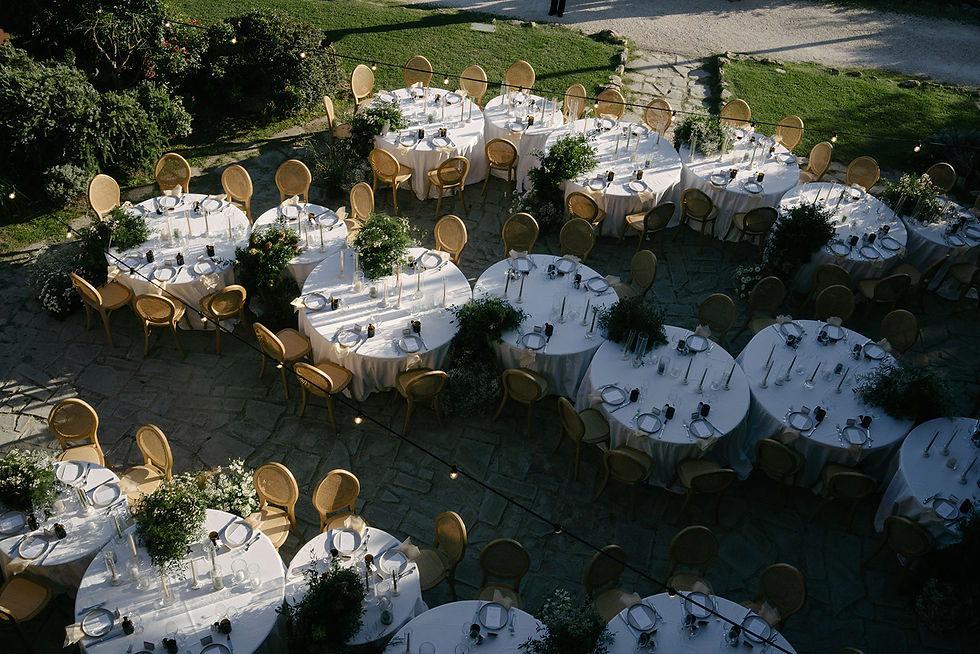
A Practical Guide: Questions to Ask Before Deciding
Whether you are considering hiring a planner or working directly with a venue, these are the questions that will help you make the right decision:
Does the venue offer in-house coordination? If yes, what exactly does that include — and on the wedding day itself, who is physically present and responsible?
How many vendors do you need to coordinate independently? If the venue provides catering, accommodation, and basic setup in-house, your external vendor list shrinks considerably.
How much time can you realistically dedicate to planning? Destination weddings require consistent attention — emails, calls, decisions — over 12 to 18 months. Be honest with yourself about your bandwidth.
What is your comfort level with uncertainty? Planning a wedding abroad always involves moments where things are unclear or move slowly. A good planner absorbs that uncertainty on your behalf.
What is your budget? Full-service destination wedding planners in Italy typically charge between €5,000 and €10,000+ or more depending on the scope of work. Factor this into your overall budget from the beginning.
What We Tell Couples Who Ask Us Directly
When couples contact Castello di Petrata and ask whether they need a planner, I give them the same answer I have given here — honest and based on their specific situation.
If they have a complex guest list, a strong design vision, or limited time to plan, I encourage them to work with a planner and I am happy to recommend specialists I have worked with and trust.
If they have a smaller group, are organized and engaged, and want to work closely with our team directly, I tell them that is absolutely possible — and that they will have our full support throughout the process.
What I never do is tell a couple they need something they do not, or that they can manage something that will genuinely overwhelm them. After 15 years, I know the difference. And the couples who trust that honesty tend to have the best weddings.
The One Thing That Matters Most
Whether you hire a planner or not, the single most important decision you will make is choosing the right venue. A venue with experienced in-house coordination, a team that has done this hundreds of times, and a genuine commitment to your experience will carry you through the planning process regardless of how you structure your support.
The second most important decision is being honest with yourself about what you need. Not what you think you should need. Not what someone on a wedding forum said. What you — given your specific life, schedule, personality, and vision — actually need to feel calm, supported, and present on your wedding day.
That is the only answer that matters.

Frequently Asked Questions
Do most couples who get married at Castello di Petrata use a wedding planner? Roughly half work with an independent destination wedding planner, and half work directly with our in-house coordination team. Both approaches work well when the right foundation is in place.
Can Castello di Petrata recommend a wedding planner? Yes. Over 15 years we have worked with many excellent destination wedding planners who specialize in Italy and in international couples. We are happy to share recommendations based on your specific needs and budget.
Is a day-of coordinator enough for a destination wedding in Italy? For a multi-day wedding weekend, a day-of coordinator alone is rarely sufficient. The complexity of coordinating arrival logistics, welcome dinner, ceremony, reception, and day-after brunch across multiple vendors requires planning that begins months in advance.
What does Castello di Petrata's in-house coordination include? Our coordination covers the full wedding weekend — venue setup, catering management, guest accommodation, timeline management, and on-site presence throughout all events. We work directly with external vendors you bring in (photographer, florist, musician) to ensure everything runs smoothly.
How do I find a good wedding planner for a destination wedding in Italy? Look for planners who are members of professional associations such as the Association of Bridal Consultants (ABC) or who have been featured in publications like Brides, Green Wedding Shoes, or Martha Stewart Weddings. Ask specifically about their experience with destination weddings in Umbria or central Italy, and request references from past clients who planned from the United States.
What should I ask a wedding planner before hiring them? Ask how many destination weddings in Italy they have coordinated, whether they have worked with your specific venue before, what their communication process looks like across time zones, and what is included in their fee versus what costs extra.
Giovanni Landrini is one of the owner of Castello di Petrata, an exclusive-use castle wedding venue near Assisi, Umbria. He has hosted over 1,000 international weddings since 2010 and participates in the DWP Congress, Engage! Luxury Wedding Business Summit, RSVP Symposium, and WIM.


Buongiorno a tutti voi! Cercavo istruzioni per cambiare la guarnizione a tre labbra di un gruppo erogatore per macchine del caffè professionali e ho cliccato su un'immagine corrotta in un forum di baristi casalinghi. Il reindirizzamento mi ha portato a una griglia di https://it.bongacams.com totalmente diversa da un sito di riparazioni idrauliche. Una signora di Milano stava smontando il gruppo in ottone con una chiave a brugola, indossando solo una cintura portattrezzi. La chat mondiale mandava mance per indovinare la pressione della pompa prima di farle togliere la cintura. Quello che ha attirato il mio sguardo è stata la sua perfetta conoscenza dell'ingegneria termica e il modo in cui puliva il doccia per non intasare i fori di erogazione. Ho gradito…